
This manufacturer does NOT have a website in English that presents their products for international markets. However, we do provide relevant information on this page, so please take a look.
Onuki Mokuzai Industry specializes in various types of wooden formwork, including flat panels for construction, viaduct panels for civil engineering, and panels for precast concrete factories. Flat panels are assembled with careful attention to nail type and pitch according to the shape, ensuring excellent durability and reusability. Viaduct panels help create smooth, curved forms. Leveraging the flexibility and ease of processing wooden formwork, they also cater to factory-processed wooden formwork. All their panels contribute to reducing construction time and costs.
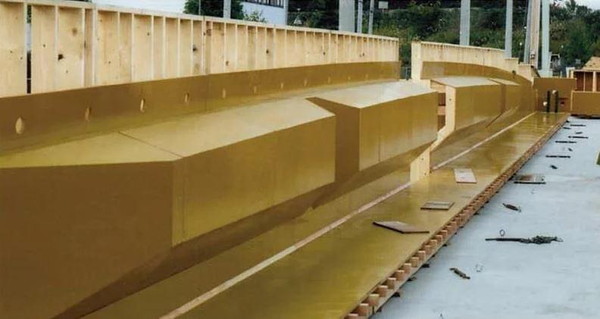
Founded in 1935 as a sawmill, Onuki Mokuzai Industry began manufacturing wooden formwork in 1959 and residential panels in 1972. They have an integrated production system for manufacturing and selling construction and civil engineering formwork as well as residential components. Both formwork and residential panels are produced with a focus on labor-saving at construction sites, shortening construction periods, and reducing waste. Their motto is to create high-quality products that have a positive impact on-site. With over 80 years of experience, they provide products tailored to the needs of the field.
With years of experience and accumulated know-how, Onuki Mokuzai Industry has developed a unique production system. By managing design, sawing, processing, and assembly in-house, they maintain a strong focus on quality. Their dedicated staff manages CAD/CAM systems, allowing them to produce even complex shape data provided by construction sites. Additionally, they utilize 3D shape analysis data linked with processing machines to create layout and processing drawings for formwork panels.
While specific examples of wooden formwork projects are not listed on their official website, their products—including flat panels for construction, viaduct panels for civil engineering, and panels for precast concrete factories—suggest extensive experience in residential and civil engineering projects. Formwork varies not only by material but also by the type of structure, whether residential, commercial, or civil engineering. It is crucial to choose a formwork manufacturer that suits the specific construction type.
Onuki Mokuzai Industry provides wooden formwork that is lightweight and flexible, making it easy to process into sizes and shapes that meet on-site needs. While it is suitable for curved structures, it requires a certain level of skill. System formwork, on the other hand, does not require complex construction techniques and can be installed by less experienced workers. It is also highly reusable. Combining wooden and system formwork can reduce costs, improve work efficiency, and shorten construction periods.
We’ve selected the three most prominent formwork materials in the current market, featuring top manufacturers for each. Our comparison covers the industry standard for general use, the rising innovation in sustainability, and the powerhouse for heavy infrastructure.

Image source:Sankikatawaku Industry Official Website
http://www.sankikatawaku.co.jp/gallery/

Image source:Fourbuild Official Website
https://kwa5ykjyax.lp-essence.com/

Image source:Toda Industry Official Website
https://www.toda-mold.co.jp/architecture